In the evolving world of artificial intelligence, multi-agent AI systems are gaining traction as powerful solutions that go well beyond traditional chatbots. These systems involve several specialized agents collaborating, each with defined roles and responsibilities, to solve complex problems or deliver tailored outcomes. Central to their effectiveness is the agent toolset, a collection of tools, connected integrations, and APIs that empower agents to communicate, access data, and coordinate actions efficiently.

In this post, we'll explore what an agent toolset means within multi-agent AI, distinguish multi-agent AI from simple chatbot frameworks, dive into key architectural patterns such as the planner-executor paradigm and reviewer loops, and discuss the persistent challenges of agency reporting—especially the manual stitching of data and repetitive chart creation. We’ll also mention key industry players innovating in this space like Reportz.io, Suprmind.ai, and IBM Technology, while drawing examples from analytics tools like Google Analytics 4 (GA4) and Google Search Console (GSC).
Defining Multi-Agent AI and How it Differs From Chatbots
To understand the importance of an agent toolset, we first need to clarify what multi-agent AI systems are and how they differ from the chatbot platforms many are familiar with.
What is Multi-Agent AI?
Multi-agent AI refers to systems composed of multiple autonomous agents that interact with each other and the environment to accomplish tasks collaboratively. Unlike a single AI assistant or chatbot, these agents have distinct functions and share information strategically. Each agent has its knowledge base, decision-making protocols, and specialized capabilities.
This orchestration of agents allows for parallel processing of complex workflows, where agents can specialize as planners, executors, reviewers, or communicators. Together, they form an interconnected network capable of handling multifaceted processes rather than simple question-answering or fixed scripted dialogues.
How Multi-Agent AI Differs From Chatbots
Aspect Chatbot Multi-Agent AI System Number of Agents Typically single agent Multiple specialized agents Functionality Handles dialogue and basic automation Manages complex workflows and decision-making Collaboration Minimal or no collaboration between modules Agents communicate, delegate, and coordinate Adaptability Fixed or reactive Proactive, with dynamic task delegation and reviewSimply put, a multi-agent AI system offers a modular and scalable approach that can evolve with new agents or integrations, making it more suited for enterprise-level challenges, such as those faced by analytics and marketing teams dealing with large volumes of data across multiple systems.
The Orchestrator Role and Agent Handoffs
A core component of a multi-agent AI is the orchestrator—the "planner" or "manager" agent responsible for sequencing tasks, allocating workloads, and managing communication between agents. The orchestrator ensures that three key activities happen smoothly:
- Agent Task Assignment: Decides what each agent should do, for example, one agent pulling data from GA4, another analyzing Search Console trends. Agent Handoffs: Seamlessly transfers context and outputs from one agent to another, ensuring no duplication or loss of information. Error Handling: Catches failures or data inconsistencies, triggering alternative workflows or human intervention.
Imagine a scenario in a marketing analytics project where the orchestrator assigns these subtasks:
Agent A pulls user behavior data from Google Analytics 4 (GA4) via API calls. Agent B analyzes search keyword trends using Google Search Console (GSC). Agent C consolidates findings and generates reports using connected integrations with tools like Reportz.io.The orchestrator oversees these handoffs, guaranteeing all agents have the data they need and pass results efficiently.
Planner-Executor Architecture and Reviewer Loops Explained
The planner-executor architecture is a common pattern in multi-agent AI systems designed to create workflow clarity and accountability:
- Planner Agent: Sets the overall strategy and breaks down tasks into executable steps. Executor Agents: Carry out specific tasks assigned by the planner, such as querying databases, running analytics, or triggering external API calls.
But coordination doesn't stop there. Effective multi-agent AI systems include a reviewer loop—a dedicated agent or process that audits and verifies the outputs before final delivery.
This loop addresses a familiar pain point in agency reporting:
- Manual stitching of data from disconnected sources like GA4 and GSC. Repeated creation and formatting of similar charts across client decks. Risk of unverified numbers making it into client-facing slides.
By orchestrating a reviewer agent that cross-checks data, reconciles discrepancies, and flags anomalies, multi-agent AI ensures result accuracy and reliability, enhancing client trust and operational efficiency.
Agency Reporting Pain: Manual Stitching and Repeated Charts
Anyone who has managed SEO or PPC reporting knows the headaches of juggling data across multiple platforms. Teams commonly rely on Google Analytics 4 (GA4) and Google Search Console for website and search performance, yet manually stitching these datasets together in spreadsheets or presentation decks is error-prone and time-consuming.
More often than not, analysts face repetitive tasks like recreating monthly charts, manually updating date ranges and filters, and cross-verifying numbers before sending reports to clients. The consequences include:
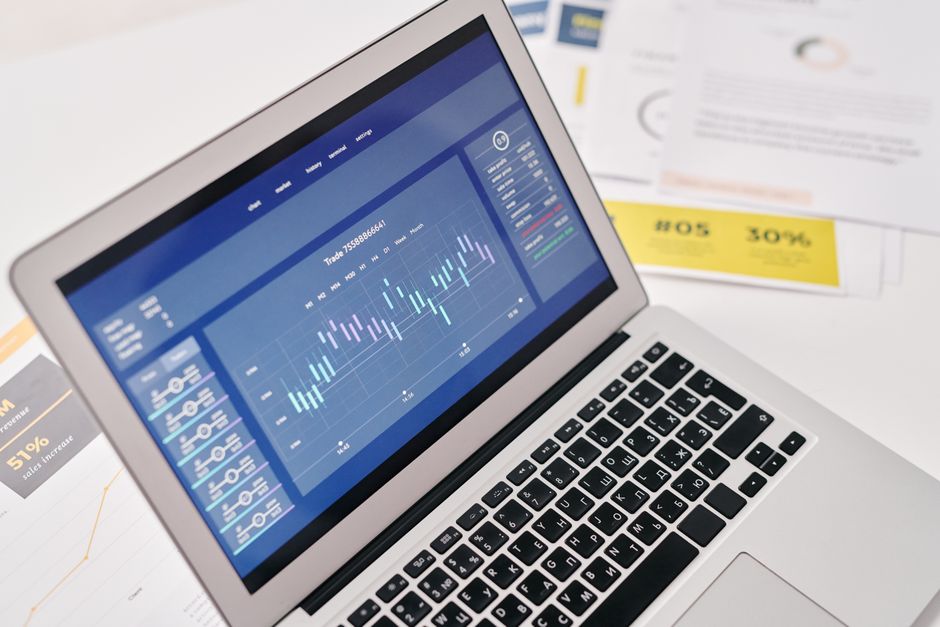
- Late reports due to manual preparation. Communication gaps caused by conflicting data sources. Increased chance of overlooked errors or inconsistent charting styles.
This pain has driven companies like Reportz.io to innovate by providing automated dashboarding solutions with seamless API integrations. Similarly, Suprmind.ai focuses on delivering intelligent multi-agent systems that enable marketing teams to automate workflows and data retrieval. IBM Technology, with its robust AI platforms, also invests heavily in building connected agent ecosystems that rely on standardized API calls and integration layers.
Why Agent Tools and Connected Integrations Matter
At the heart of multi-agent AI’s promise are agent tools—the software components, APIs, and integrations that agents use to access data, execute tasks, and communicate results effectively. The power of agent tools lies in their ability to:
- Connect heterogeneous data sources: Whether connecting GA4 behavior data, GSC search insights, or ad performance metrics, agent tools provide standardized API calls for seamless access. Enable efficient task automation: Agents use these tools to trigger workflows, generate reports, or update dashboards without manual intervention. Support real-time orchestration: Connected integrations allow agents to interact dynamically, improving accuracy and speed.
For example, an agent toolset connected to GA4’s API lets an executor agent pull user journey data on demand, while another agent leveraging GSC’s API fetches relevant keyword rankings. A reporting agent then uses Reportz.io’s API to compile and format the charts, producing client-ready reports. This interconnected ecosystem reduces latency and eliminates the common bottleneck of exporting and importing CSV files.
Conclusion
Multi-agent AI systems represent a significant advancement over traditional single-agent chatbots by enabling coordinated, specialized collaboration among agents. The agent toolset—comprising connected integrations and efficient API calls—is essential to realizing this potential, allowing agents to automate complex workflows, orchestrate handoffs, and maintain oversight through review loops.
Enterprises struggling with agency reporting pain points—such as manual data stitching from GA4 and GSC or repetitive chart generation—stand to benefit enormously from adopting multi-agent AI frameworks powered by robust toolsets. Industry leaders like Reportz.io, Suprmind.ai, and IBM Technology are paving the way, enabling marketing and analytics teams to focus on insights instead of grunt reportz work.
By prioritizing clarity, automation, and connected integrations, multi-agent AI systems and their agent toolsets not only improve accuracy and scalability but also free teams from the drudgery of manual reporting cycles. As these technologies mature, expect a new era of intelligent automation tailored to complex digital marketing ecosystems.